By Rich Bangs
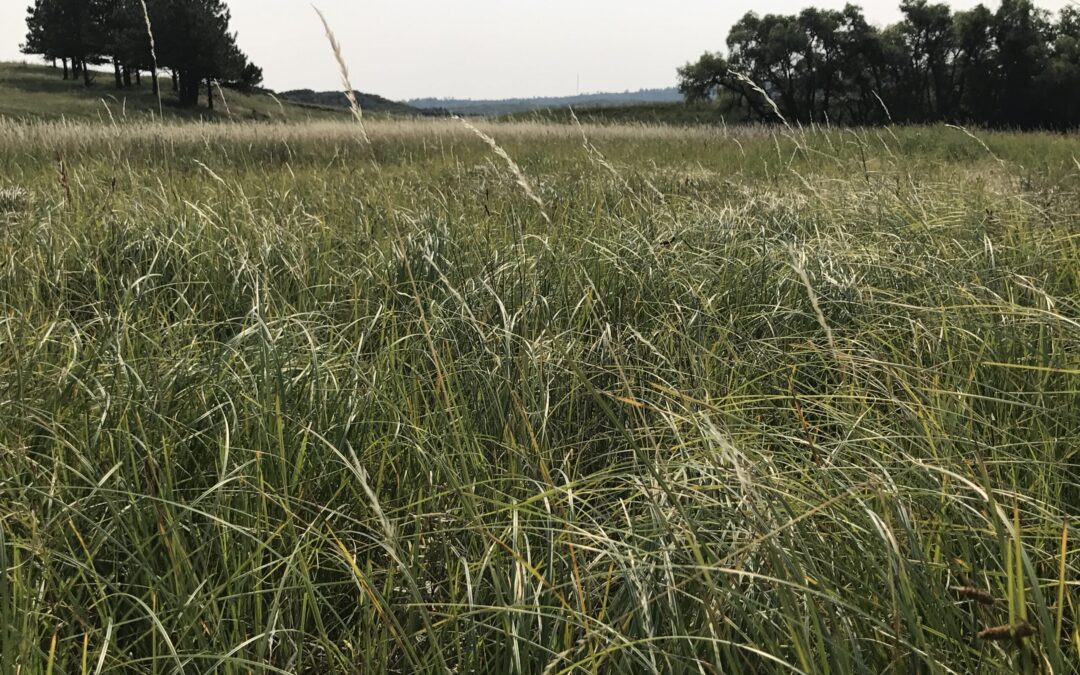
This week is National Grasslands Week, celebrating large open spaces covered with vast stretches of waving grasses and are home to a wide variety of plants and animals.
Grasslands are found on all continents except Antarctica. The most extensive natural grasslands are areas between forests and deserts. Temperate grasslands are found in North America, Argentina, and a large stretch from Ukraine to China. Grasslands are filled with intriguing animals and flora. Even in the severe Arctic climate, healthy grasslands support a great variety of plants and animals. Everything in this vital biosphere is interconnected, right down to the soil.
Douglas County has grasslands on its eastern edge, and in much of Elbert County, large swaths of grasslands stretch from horizon to horizon.
The USDA Forest Service manages 20 national grasslands, spanning more than 4 million acres across 12 western states. In Colorado, the Pawnee National Grassland in the northeastern corner of the state is comprised of 193,060 acres and is managed by the Forest Service. Many early homesteaders tried to make a living off the land, but a harsh climate of wide temperatures swings and little rainfall made farming risky. Those who stayed learned many lessons and adjusted their practices and their tools. Today, historic farming equipment is on display at the Lee and Dorothy Rhoads Farm Implement Museum within Crow Valley Recreation Area. This collection of equipment, donated by the descendants of homesteaders, demonstrates what life was like in pioneer days.
Interested in taking a road trip? The Pawnee Buttes within the Grassland are a little tricky to find, but these pinnacles rising straight out of the flat grassland will be obvious when you see them. And once you get here, there is lots to do. A two-mile hiking and horseback trail leads from the parking lot to an overlook. Look closely along your journey for fossils — the buttes are one of the world’s best sites for vertebrate fossils. In fact, some 100 species have been located near here.
And don’t forget your binoculars. Hawks, falcons and swallows soar and flutter around the cliffs, which are closed to the public from March through June for nesting season. They are just a few of the diverse birds that call the Grassland home. In addition, there are over 500 species of plants to check out. While you’re exploring, look for arrowheads and other archaeological remains. But don’t remove them: it’s against the law. The buttes are located about 13 miles south of the Wyoming border north of CO-14.
Find more information on the Pawnee National Grassland here.