By Mary Taylor Young
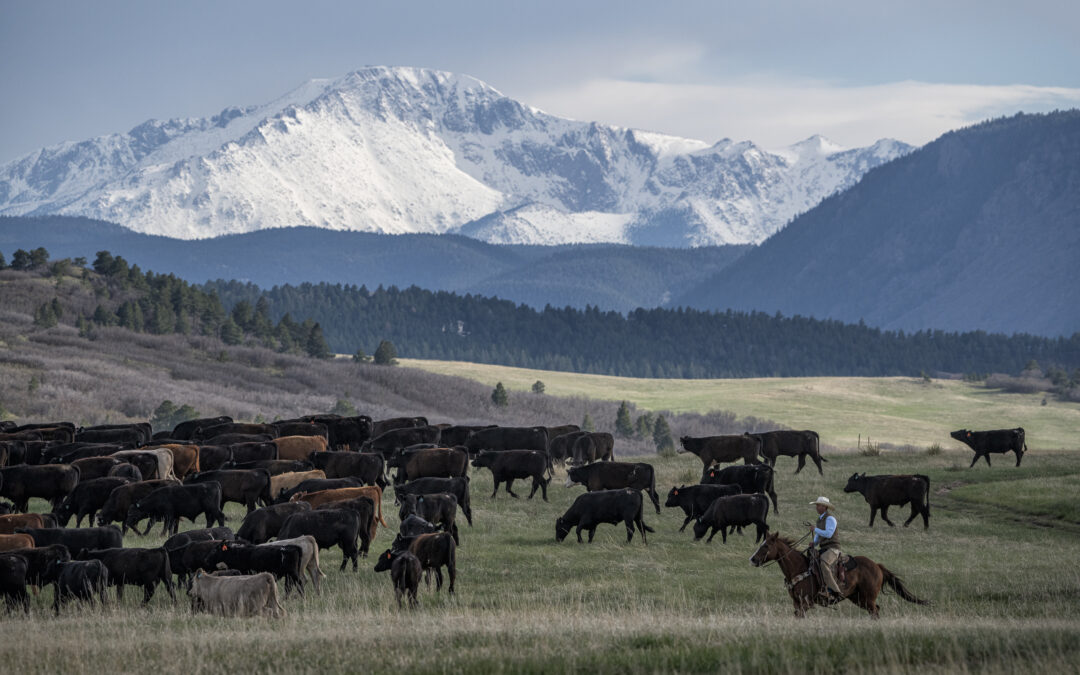
You’re out for a hike on a DLC open space property like Spruce Meadows, when you come face to face with a cow. Or multiple cows. This is a conserved open space, you might think, set aside for wildlife and native plants. Why are there cattle on it?
The short answer is cattle are good for grassland landscapes. The prairies of the American West evolved with bison. Millions of these large herbivores moved across the grasslands of North America in a continual cycle of munching, trampling and wallowing. Their grazing stimulated growth of the grasses. Their hooves and wallowing broke up the ground, moving nutrients through the soil, allowing seeds to get below the surface and take hold as new plants. The packages of processed grass the animals deposited returned nutrients to the system. With bison gone from the ecosystem, grazing cattle provide the best way to re-create their role. “It’s important to mimic that ecosystem service,” says DLC Stewardship Manager Evan Liddy.
Each DLC property is governed by its own, unique conservation agreement, so whether and how grazing is used varies by the property. Many private ranches still run cattle as they have for generations, though the actual practices may be different today. Publicly-accessible parks like Spruce Meadows, Greenland Ranch and Lincoln Mountain lease out grazing rights. Sandstone Ranch allows cattle on the back side of the property that is only open to guided access.
“We work with groups like the Natural Resources Conservation Service and CORVUS (an environmental consulting company) who are experts,” says Liddy, “looking at landscape, vegetation and so forth to see what each property needs.” The details on grazing, such as how long cattle are left on a fenced parcel and how many animals can be grazed there, are then written into the grazing lease.
“Cattle are the best tool to mimic the grazing effect of bison,” says Liddy. “A well-researched grazing plan can be very beneficial.” Rotational grazing—moving cattle between fenced grassland plots on a specific time schedule—is beneficial to keeping the range healthy and avoid over-grazing. It improves soil quality and reduces weeds.
Beyond the land management benefit, cattle ranching is a long-standing heritage of Douglas County. “Ranching is a big part of who we are,” says Liddy. “It’s part of the character of the land.”
So if you encounter cows on your next hike, give them their space. Honor the long-time ranching rules of leave open gates open, and closed gates closed (after you pass through). Recognize that cattle are part of the landscape. Our DLC properties are in better shape because of them.
photo: Michael Ryno